Frequently Asked Questions
-
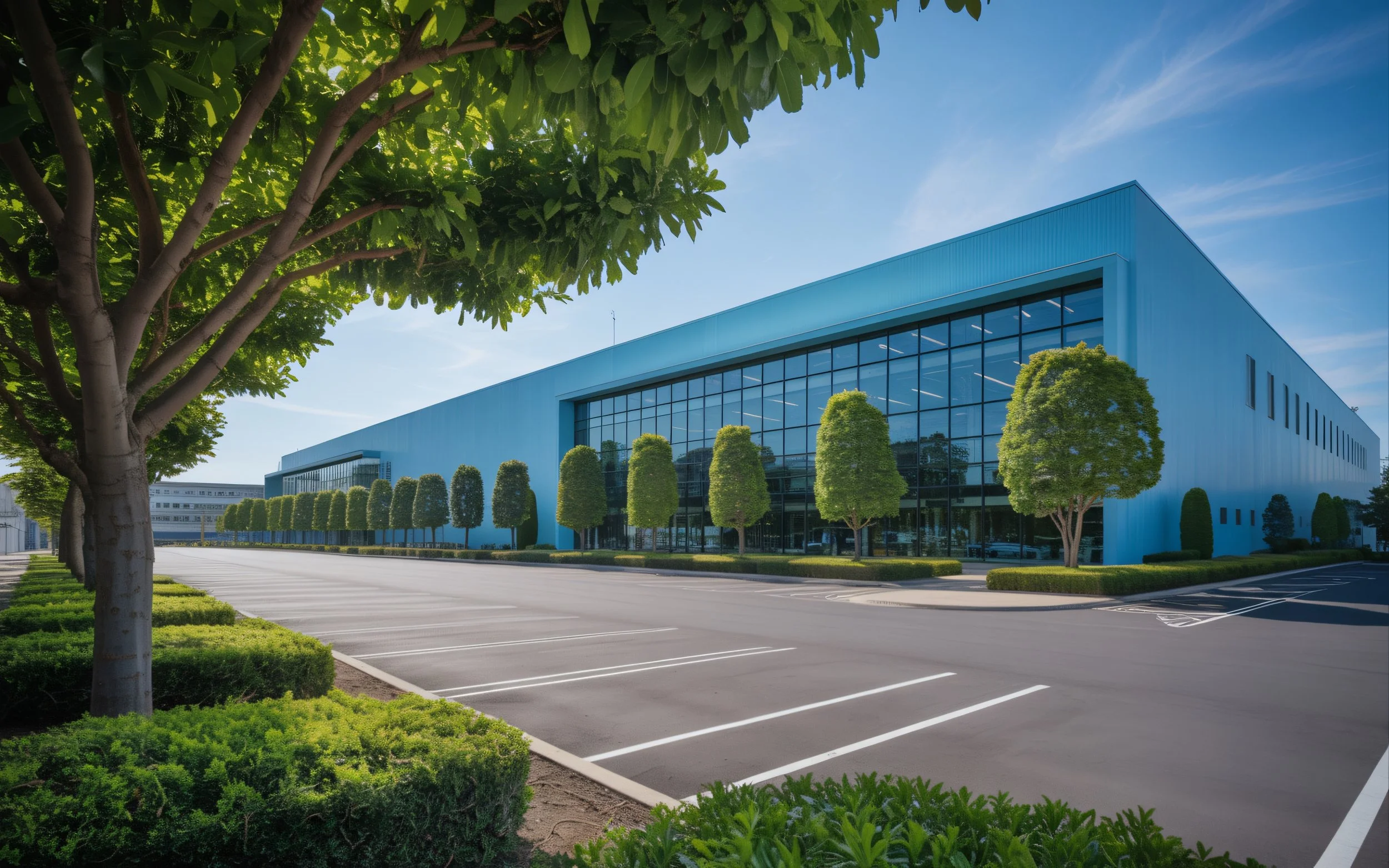
Project Azalea is located on a 200-acre site off Randall Hunt Road in McDuffie County, GA
It is 6.9 miles off interstate i-20 and approximately 8 miles East of downtown Thomson.
Neighboring sites include an approved 2,700-acre solar farm and a large regional Georgia Power Substation
View maps of the proposed location here.
-
Project Azalea includes up to 8 buildings, totally approximately 1,800,000 square feet on the 200-acre site
View the proposed building layout here.
-
This site was selected for its proximity to existing regional power infrastructure. It is within the already-approved 2,700-acre Rock House Solar Farm project, and adjacent to the Thomson Primary Substation and high voltage power lines.
This project will provide significant and recurring tax revenue, substantial job creation (temporary during construction and permanent once finished), and infrastructure improvements. Each of these benefits have a tremendous impact on the community in boosted funds to the school system, improved roadways, massive local economic impact beginning with construction, and more.
-
Project Azalea will utilize a closed-loop cooling architecture, eliminating the need for resource-intensive water usage. The project’s estimated daily water usage is 30,000 gallons per day (roughly 1% of McDuffie County’s advertised 3,000,000 gallons per day capacity).
The water used in the closed-loop cooling system will be recycled continuously through the loop for server-side cooling, reducing the total building’s water usage to that of the operations of the on-site staff and irrigation.
As with any other traditional industrial or commercial business, the non-cooling/operational water usage by the on-site employees will be returned to sanitary sewer (with POTW approval)
Learn more about the water system design for Project Azalea here.
-
Project Azalea will have low impact on water resources.
The project will be connected to the municipal water utility and use an estimated 30,000 gallons per day (and return wastewater to the sewer system).
Since Project Azalea uses a closed-loop cooling system design, the only water consumed is for regular use by the Full Time employees (restrooms, kitchens, etc.)
For reference, 30,000 gallons per day equates to the same usage of 120 homes.
-
NO. Here’s Why:
Project Azalea will be connected to the municipal water system. It will not be on a well and will thus not affect the water table or any property on a well.
-
NO. Here’s Why:
Power consumed by Project Azalea is separate and independently-sourced. It does NOT consume power from existing grid load.
In January 2025, the Georgia PSC (Public Service Commission) "voted unanimously on Thursday to approve a new rule that allows Georgia Power to charge new data centers in a manner that will protect ratepayers from cost shifting.
In addition to site specific costs, the data centers would pay for costs incurred by upstream generation, transmission and distribution to these large-load power users as construction of the data centers progresses.
This protects Georgia Power’s residential and other commercial/industrial customers.” (Source: https://psc.ga.gov/newsroom/media-advisories/page2)
Georgia EMC’s have adopted similar protocols to ensure that the upstream costs of infrastructure upgrades are paid for by the data centers to ensure that ratepayers are protected and prevents cost-shifting.
-
Using sound mitigating design methods (parapets, acoustic walls, natural vegetation, extended buffers, etc.), noise levels are negligible at and beyond the property boundary.
For enforcement, data center projects typically procure sounds studies that quantify the existing ambient sound profile at the property and then agree to NTE (not to exceed) decibel limits with the JHA (jurisdiction having authority).
Generators will ONLY run during Emergency grid outages. Regular testing will be conducted in phases and batches in order to stay below the required noise threshold.
-
Between construction and the electrical equipment housed in the data center, the initial cost is estimated to be over $1 billion. Through the life of the project, more investment will be made when the equipment is replaced as new technology is introduced
-
No, here’s why: These projects are privately funded, with developers and operators covering construction and operating costs as well as the costs required to upgrade the infrastructure needed to support the project.
-
Yes, tremendously. In McDuffie County, public schools receive roughly 66% of all property tax revenues, making the school system the largest beneficiary of new taxable value.
Data centers are particularly strong contributors because they generate significant tax revenue while placing minimal demand on public services.
Unlike residential or manufacturing development, data centers add few to no students, generate limited traffic, and require relatively little ongoing public infrastructure.
This efficiency is well documented in Loudoun County, the nation’s largest data-center market, where county officials have reported that data centers consume only about four cents in public services for every dollar they generate in tax revenue (Source: https://loudounpossible.com/data-centers).
-
No, here’s why: Backup generators are used only during power outages or routine testing (usually 30 minutes/month during business hours).
They’re regulated by the EPA and subject to strict emissions controls. Sound enclosures reduce noise impact.
-
Data centers have been around for much longer than most people realize. Some of the earliest data centers in the US were built before 1994. Of all the data centers built in the US today, approximately 50% were built >10 years ago and the other 50% have built in the past 10 years.
Source: https://www.datacenterdynamics.com/en/opinions/how-much-capacity-is-inaging-data-centers/
Data centers are infrastructure assets with 30–50 year shells, upgradeable internals, and high reuse value. Servers turn over every 3–5 years.
If one tenant leaves, the facility can be upgraded or re-leased. And even in rare closures, the property retains value because of its electrical capacity, fiber access, and industrial design. Data centers are long-life infrastructure assets — not temporary buildings.
Further, compute demand is not cyclical like retail demand. Enterprise cloud migration, AI, Digital Healthcare, Autonomous systems, and digital commerce/payment processing all create constant, increasing computing demand.
-
No, here’s why: First, data centers coordinate with regional utility providers and work through existing guidelines, processes, and studies to ensure infrastructure can support the planned electrical demand.
Next, the power that the data center will depend on is not power that is currently on the grid and thus will not be pulled from any of the supplies used to power our homes and businesses today.
The data center will purchase the power and pay for any infrastructure upgrades needed to operate the facility without affecting power reliability and availability that is serving current customers. This ensures no cost-sharing will be transferred to the current customers in the form of increased power bills.
-
No, here’s why: Data centers are clean, non-polluting facilities. They do not emit fumes, discharge chemicals, or generate hazardous waste. The main byproducts are heat and sound—both of which are contained or mitigated on site.